Colosseum
an extensive research into the redevelopment potential of a former cinema
about the project
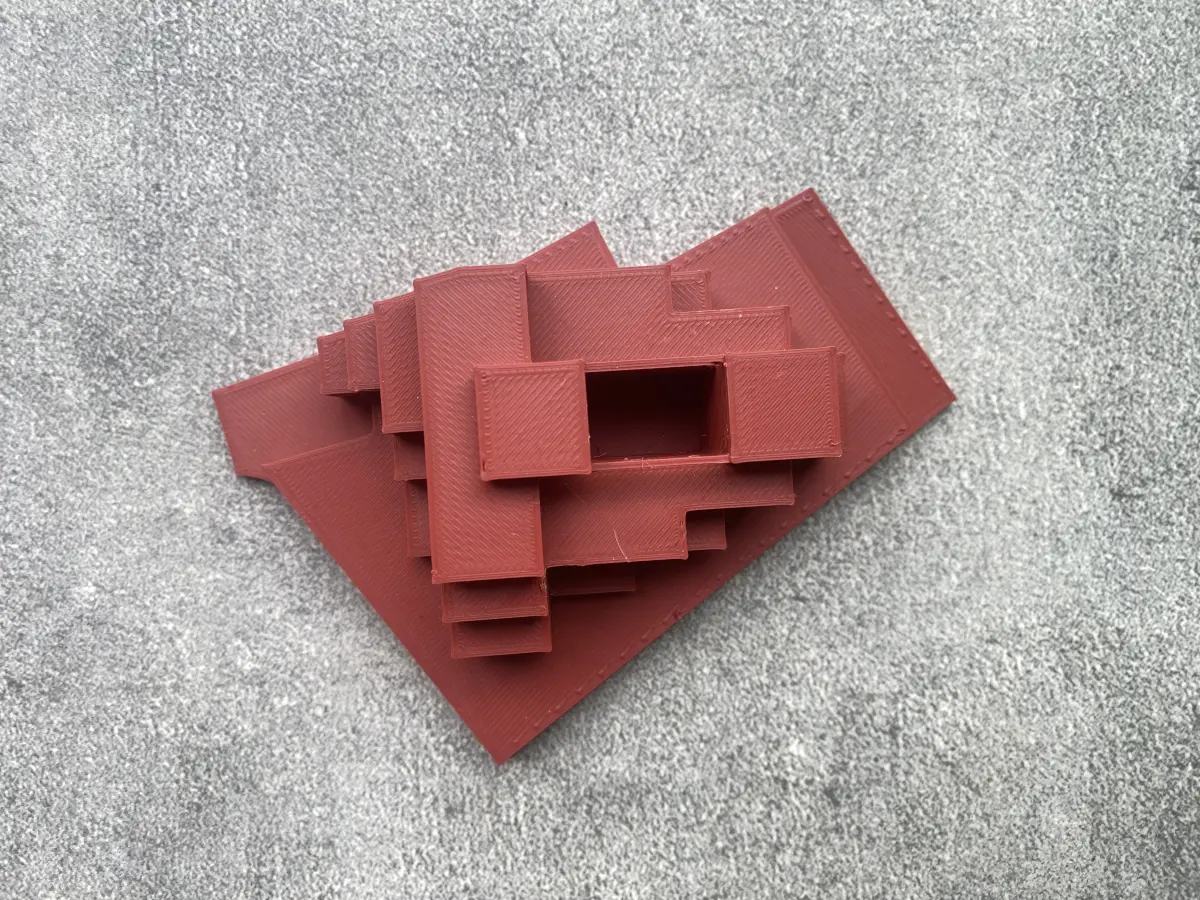
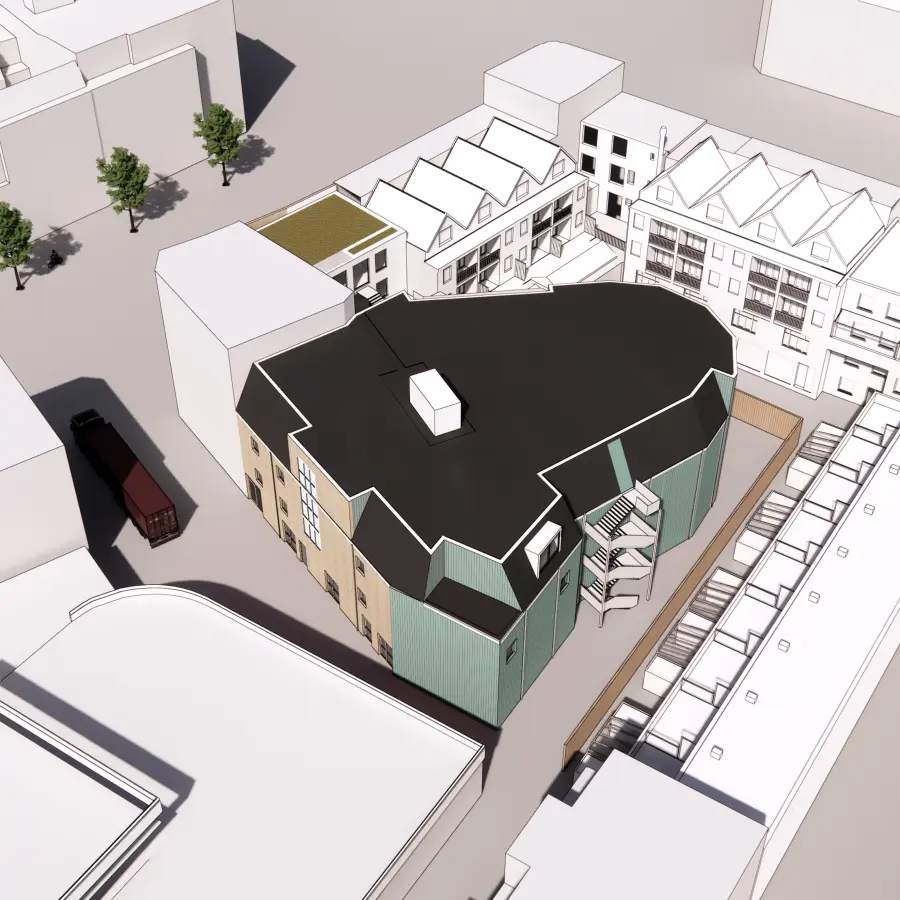
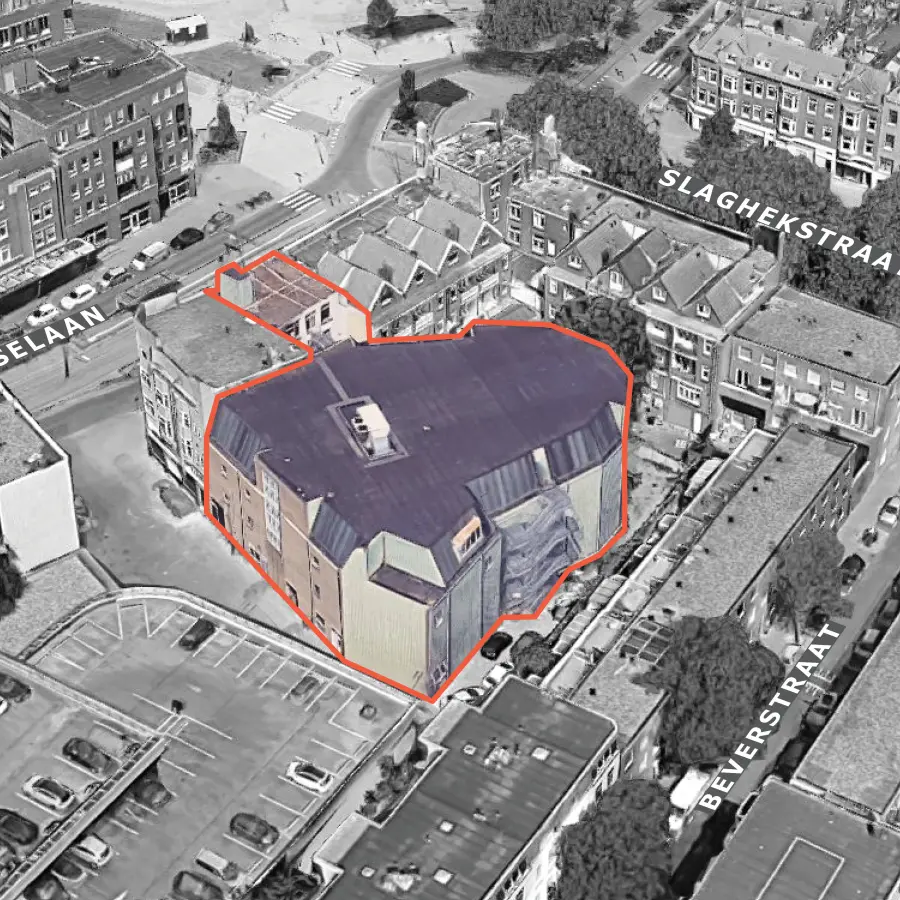
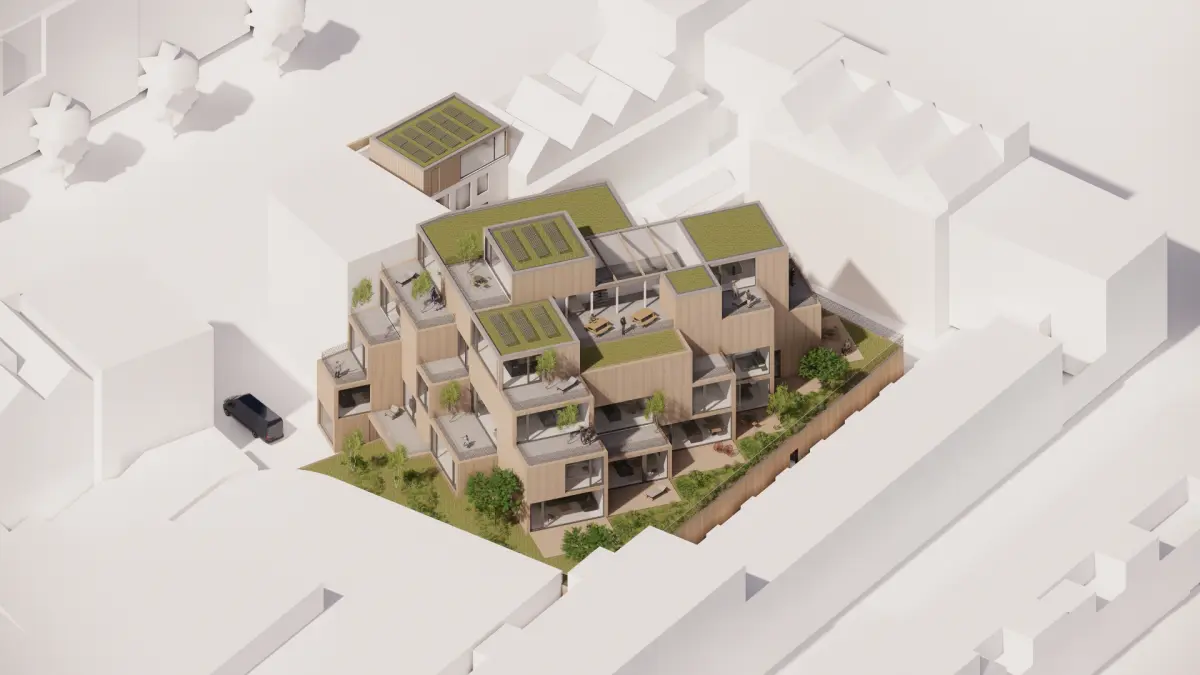
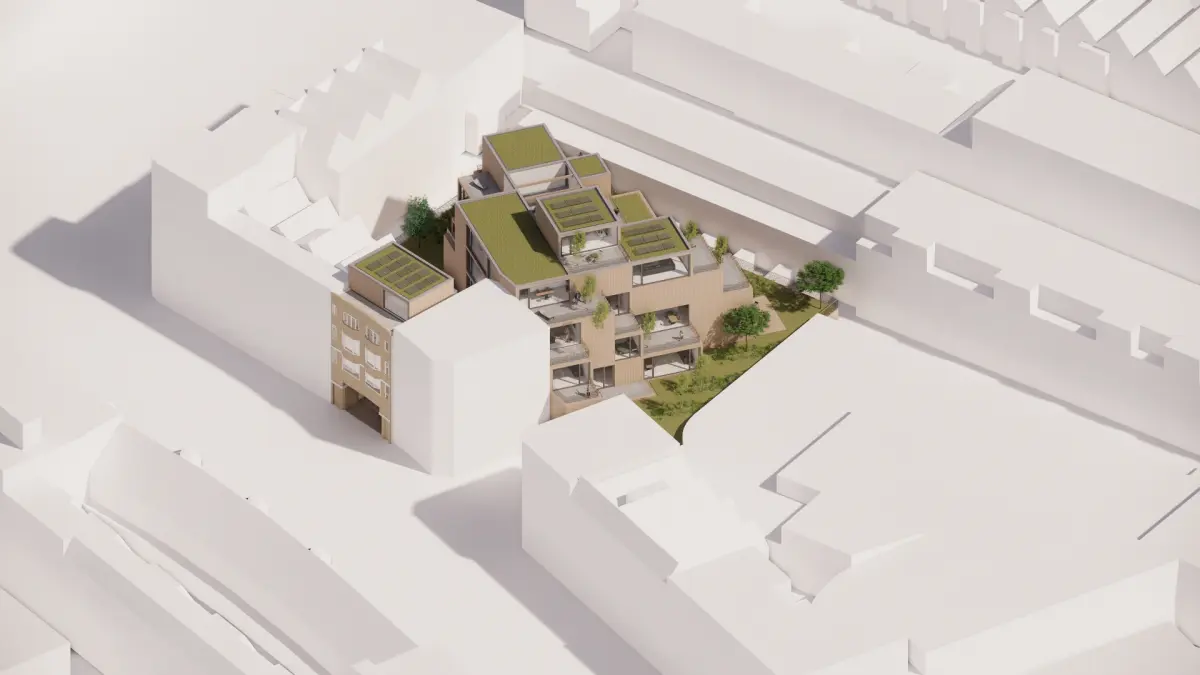
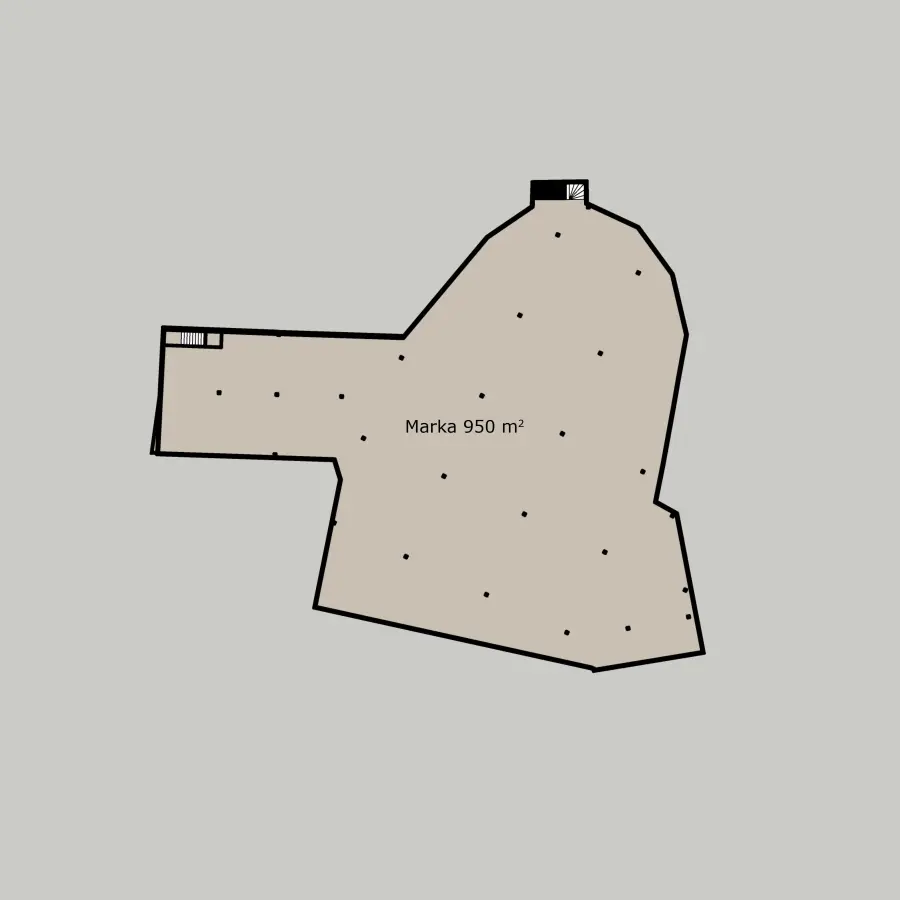
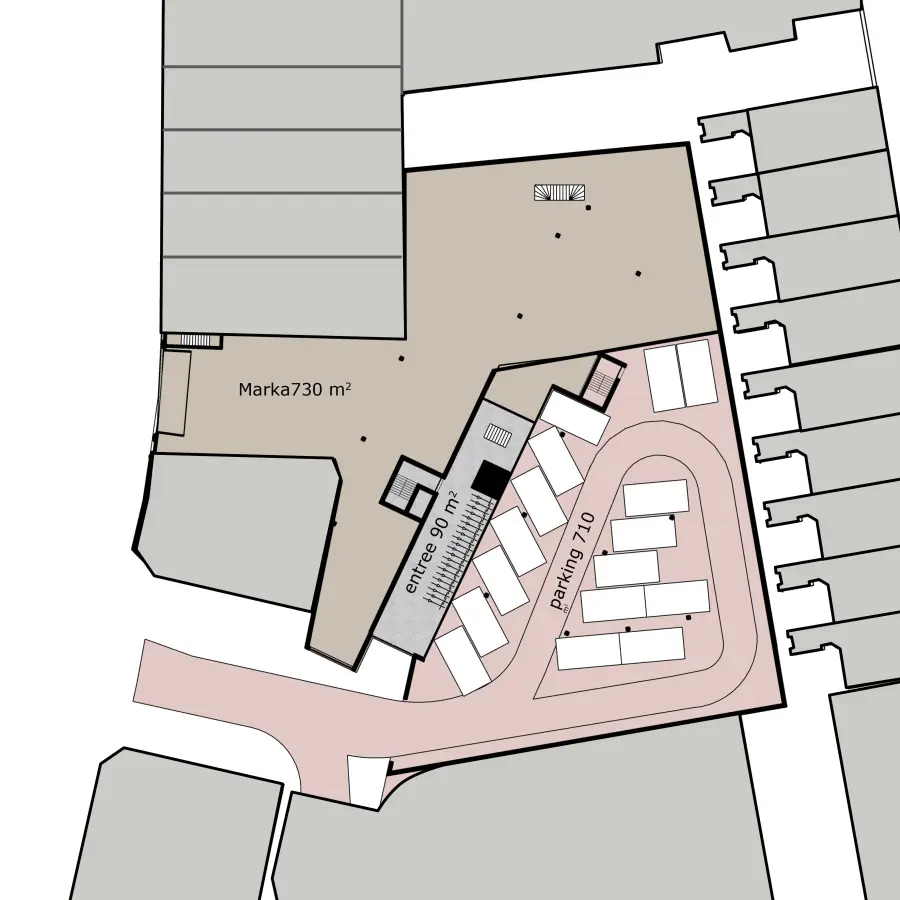
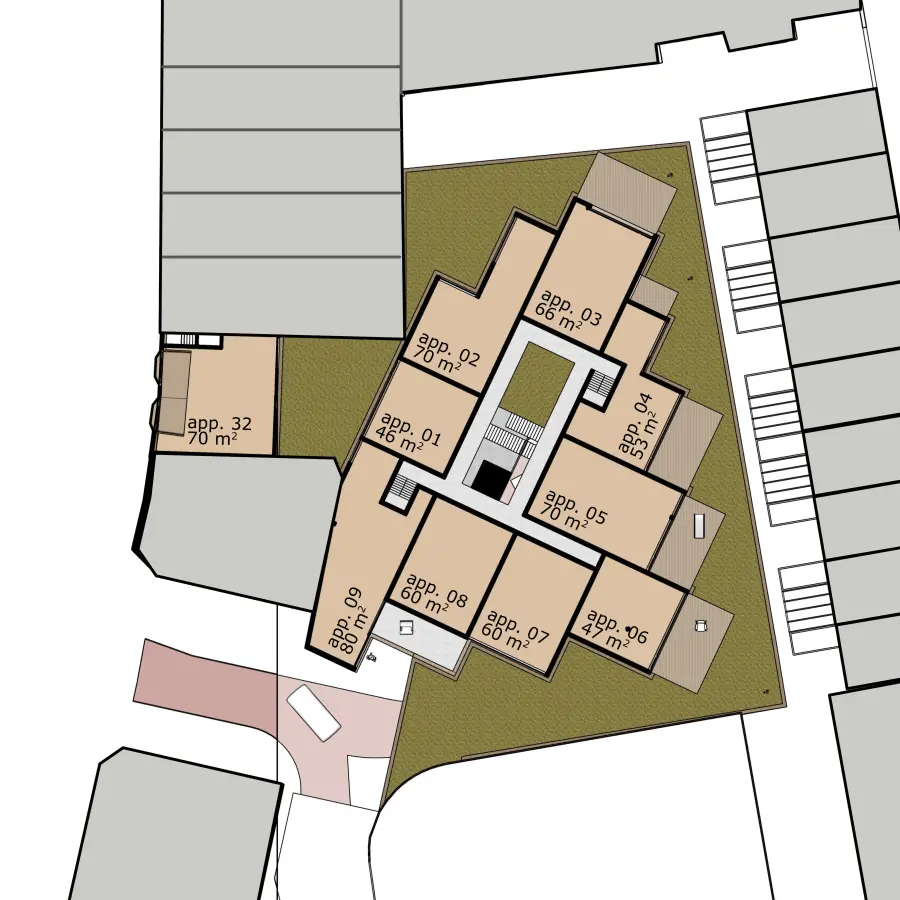
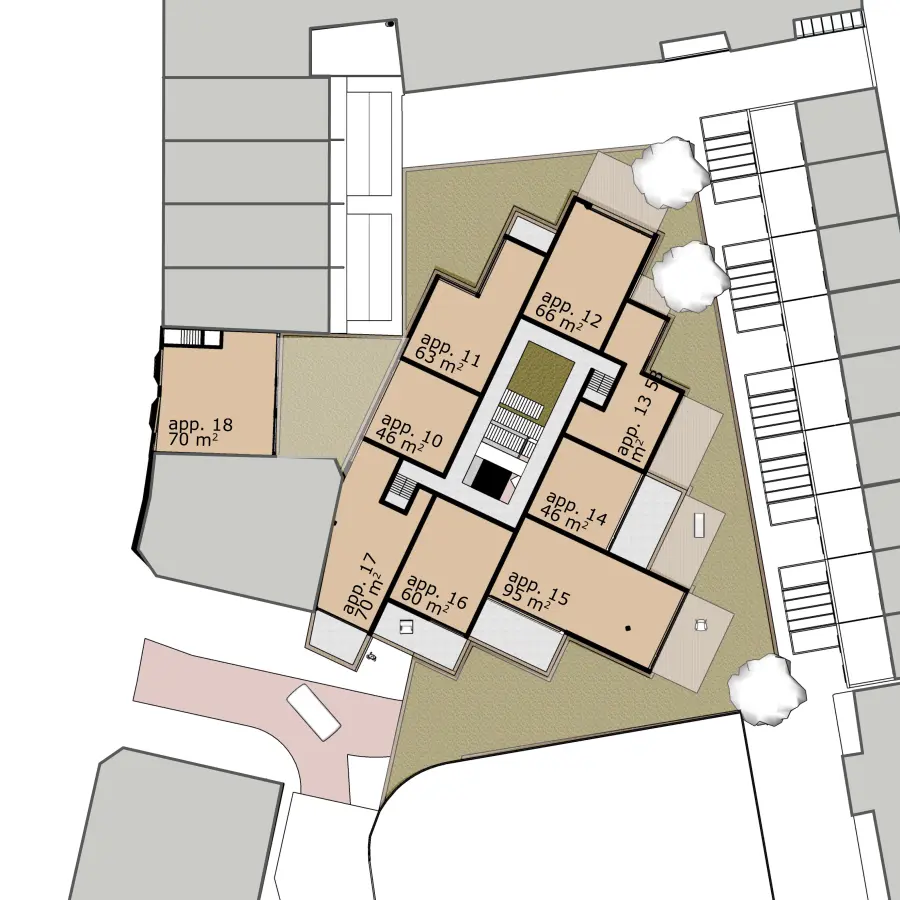
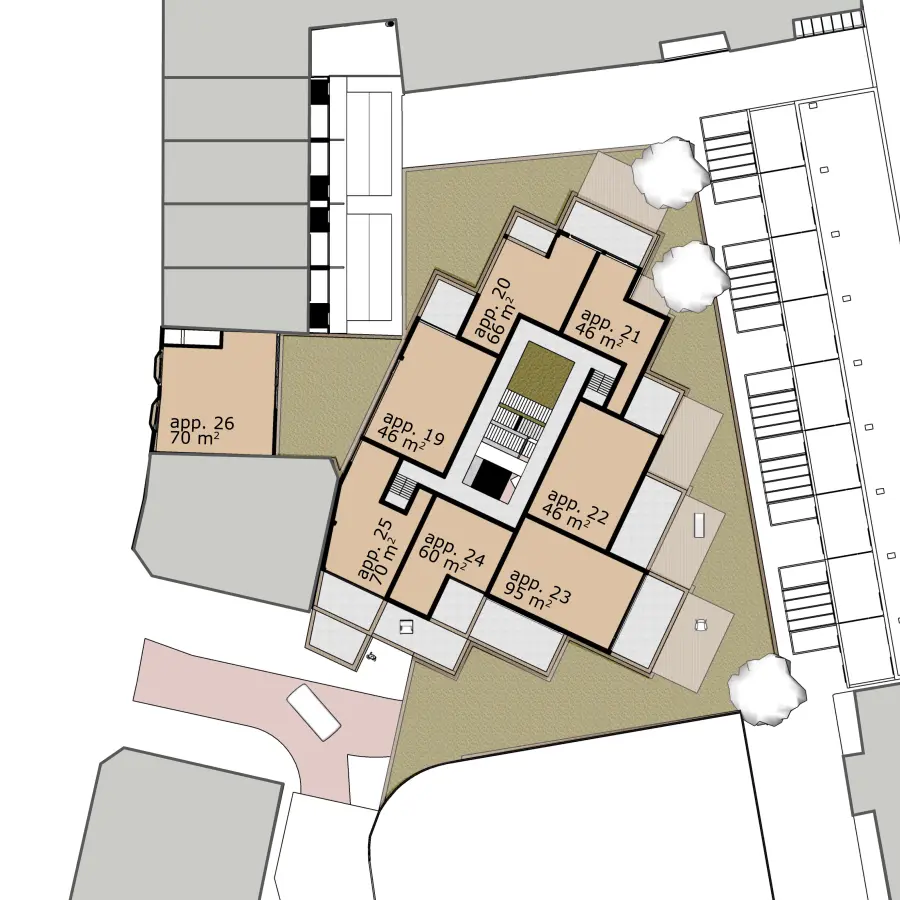
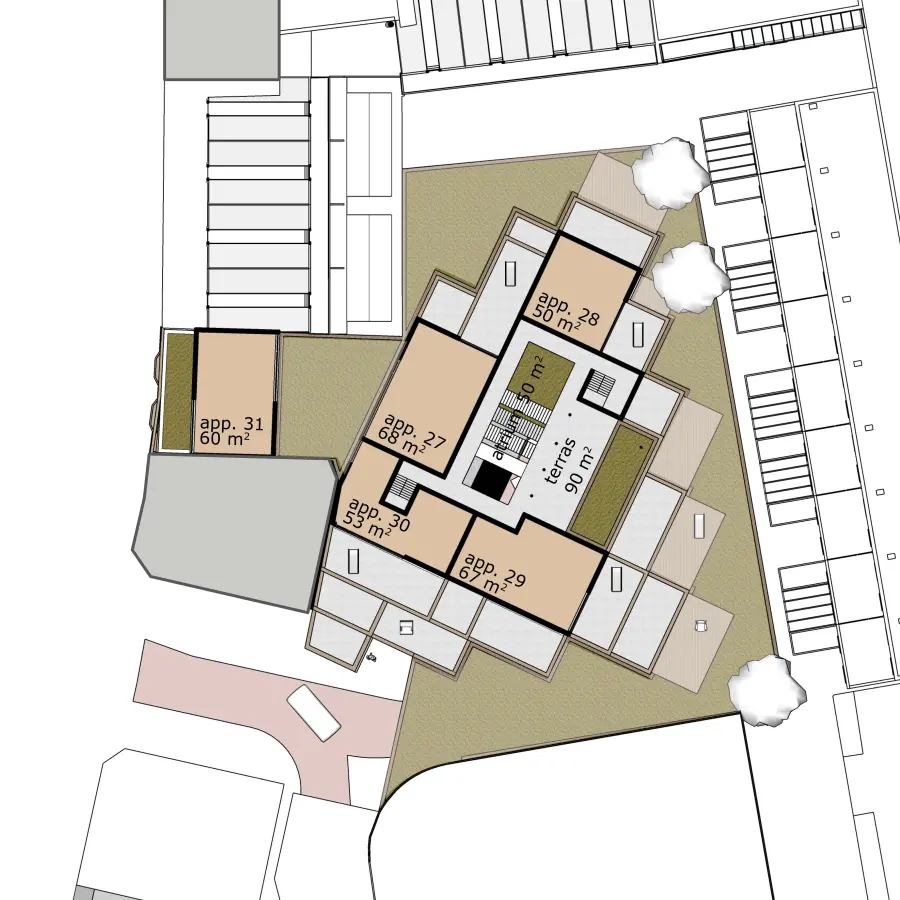
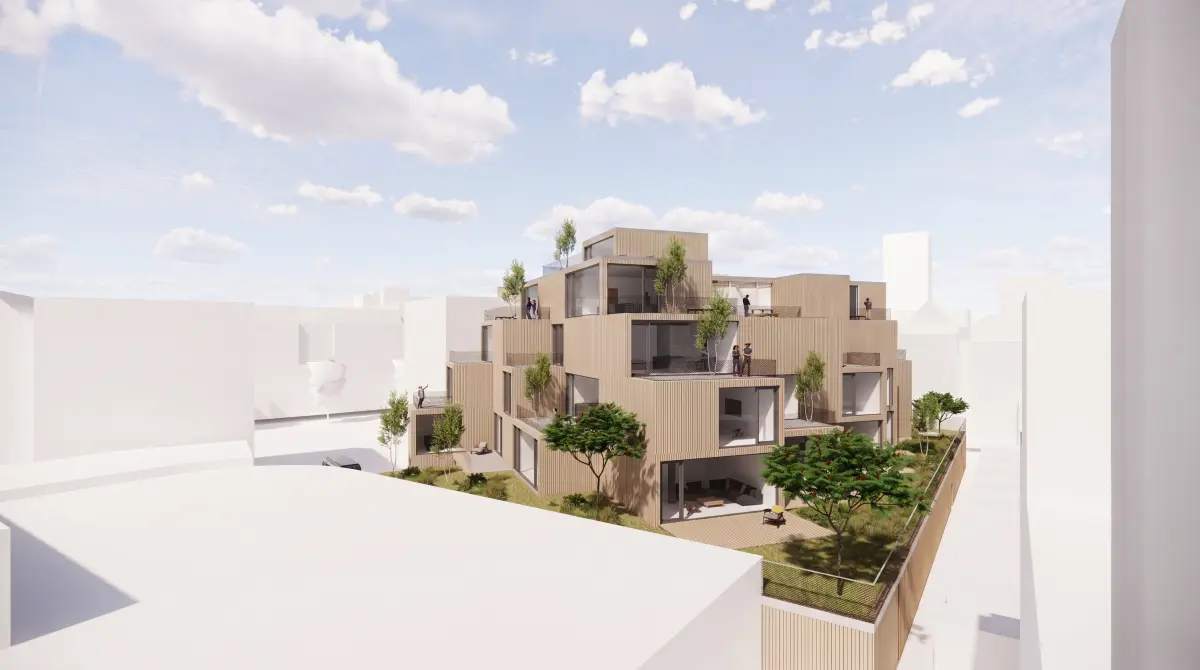
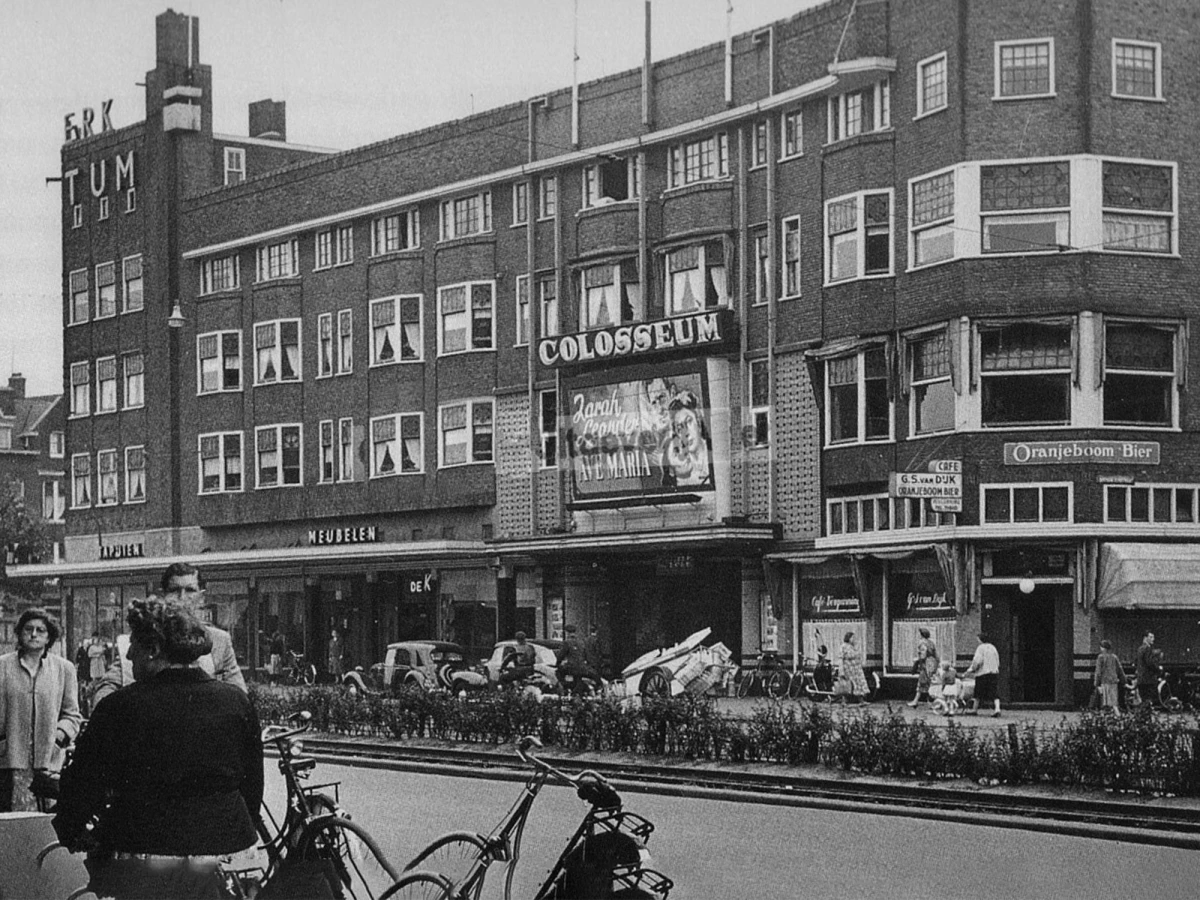
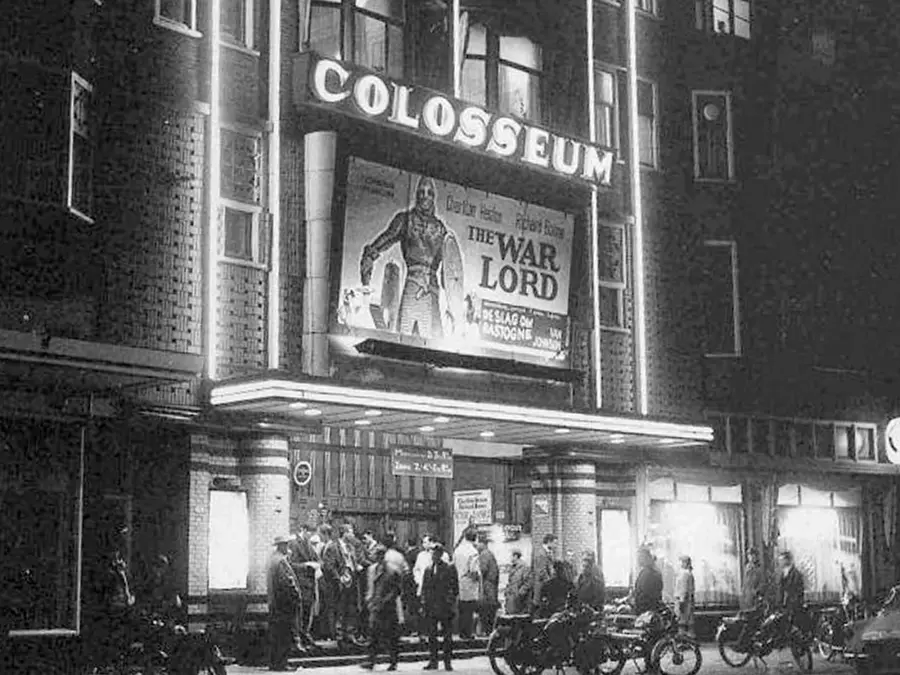
On Bijerlandselaan stands the Colosseum, opened in 1929 as a cinema and later converted into a department‑style home store. Little remains of its former fame: the original front façade and entrance canopy are hidden behind loud advertising, while the vacant, colossal rear volume in the middle of the perimeter block leaves a bleak impression. Instead of following the usual route of demolition and new construction, our initial brief, we chose to put the potential of reuse and transformation at the heart of the project. A careful study of the building’s history and the load‑bearing capacity of foundation and concrete frame resulted in a distinctive design for an apartment building in which roughly 32 dwellings are stacked as ‘pixels’ on top of a commercial plinth of approximately 1,700 m² with parking underneath.
On Bijerlandselaan stands the Colosseum, opened in 1929 as a cinema and later converted into a department‑style home store. Little remains of its former fame: the original front façade and entrance canopy are hidden behind loud advertising, while the vacant, colossal rear volume in the middle of the perimeter block leaves a bleak impression. Instead of following the usual route of demolition and new construction, our initial brief, we chose to put the potential of reuse and transformation at the heart of the project. A careful study of the building’s history and the load‑bearing capacity of foundation and concrete frame resulted in a distinctive design for an apartment building in which roughly 32 dwellings are stacked as ‘pixels’ on top of a commercial plinth of approximately 1,700 m² with parking underneath.
Reuse as a starting point: climate, city and residents first
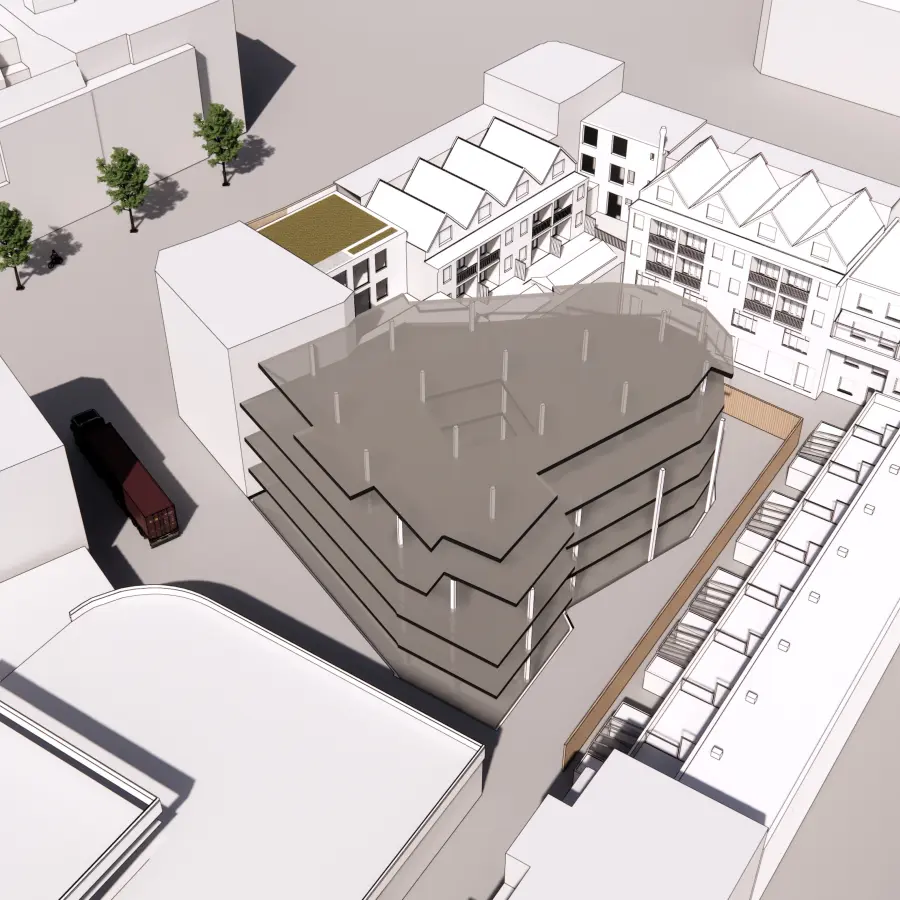
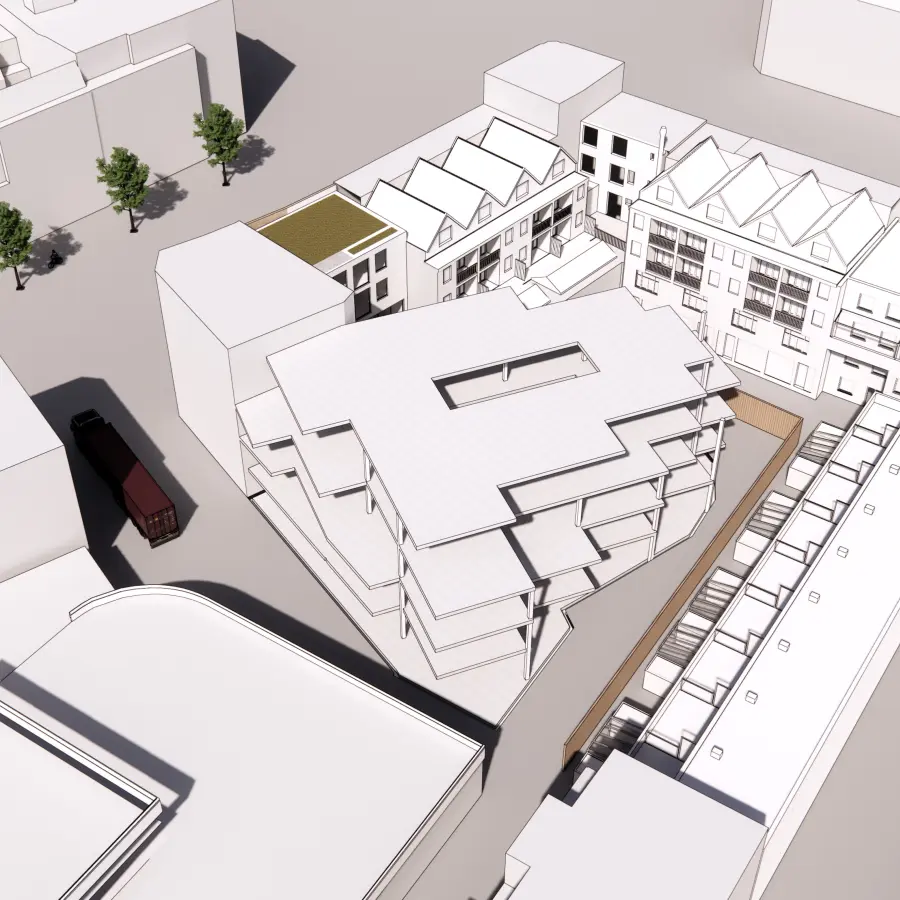
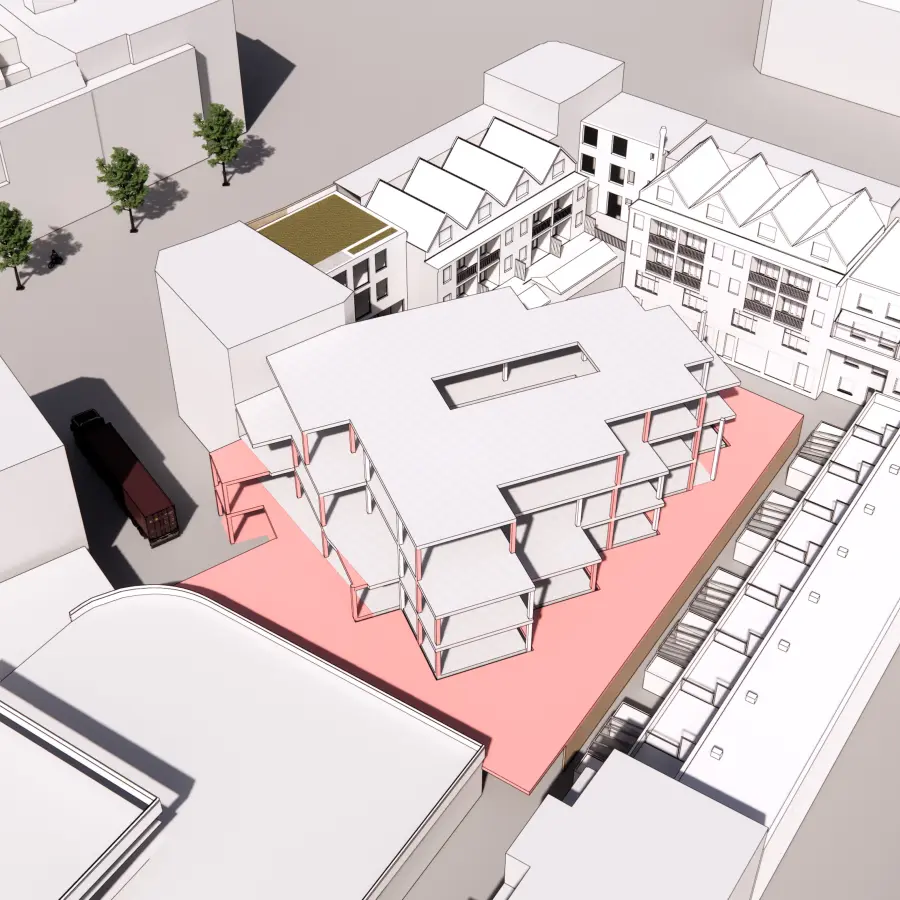
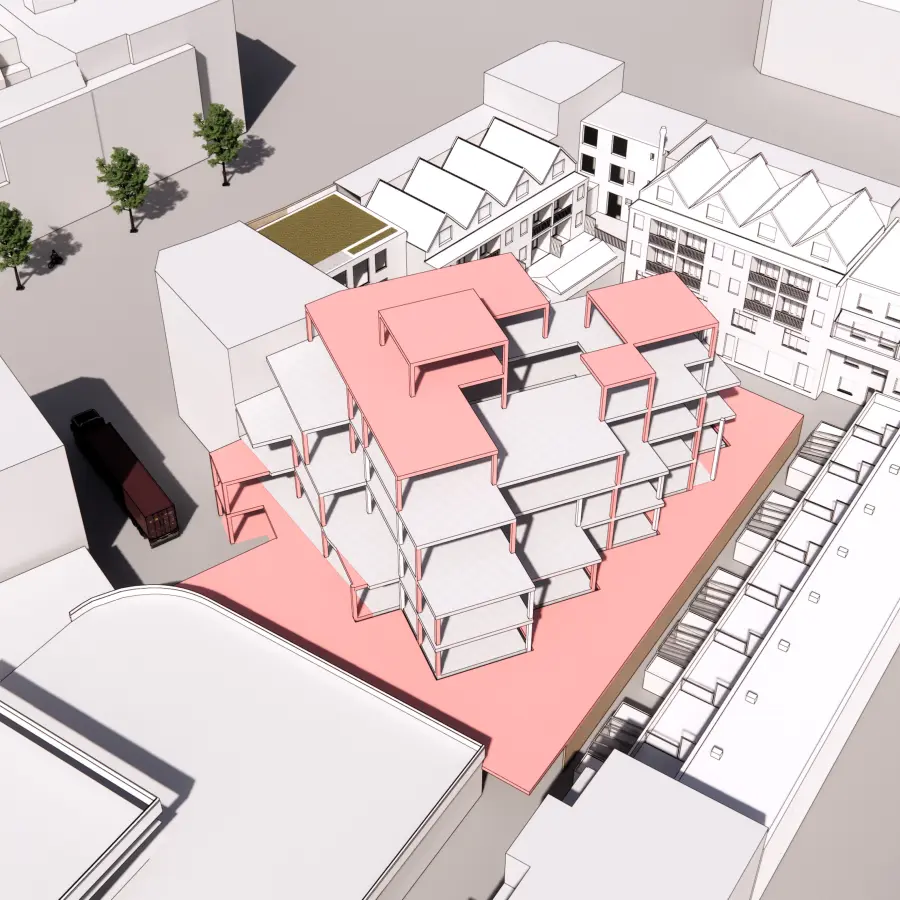
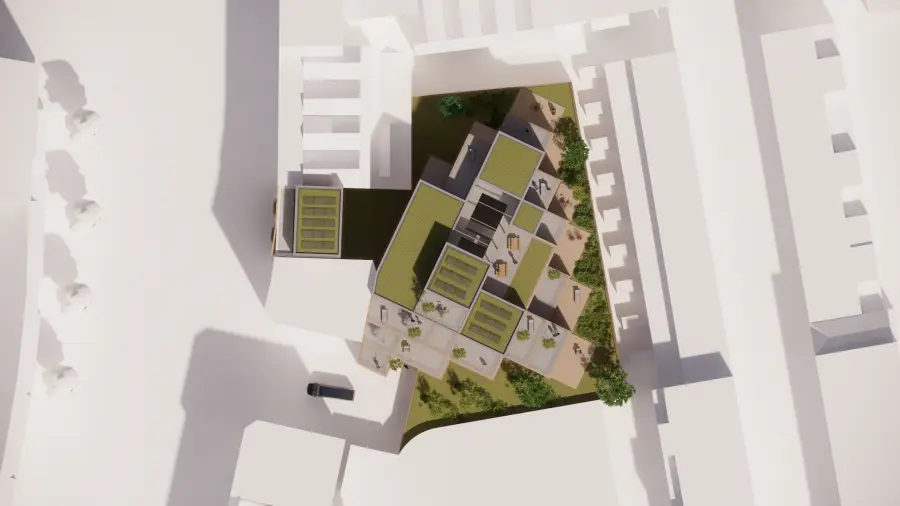
Rather than opting for demolition and replacement, as is often the default in complex inner‑city transformations, this project centres on the reuse of the existing structure and foundations, drastically reducing CO₂ emissions, material use and construction nuisance. The original building is stripped back to a bare structural skeleton; selected floor areas are then cut away and new prefabricated CLT ‘pixels’ are added in strategic positions to form a dynamic, layered composition. The result is a ‘pixel mountain’ of compact apartments, with generous space for private terraces, green roof gardens and shared outdoor areas. The new bio‑based building envelope is highly insulated, airtight and vapour‑open. The relatively heavy concrete floor slabs of the original frame are turned into green, water‑retaining roofs that reduce heat stress, temper peak runoff to the sewer system and create a more pleasant microclimate within the perimeter block.
Restoring the original character
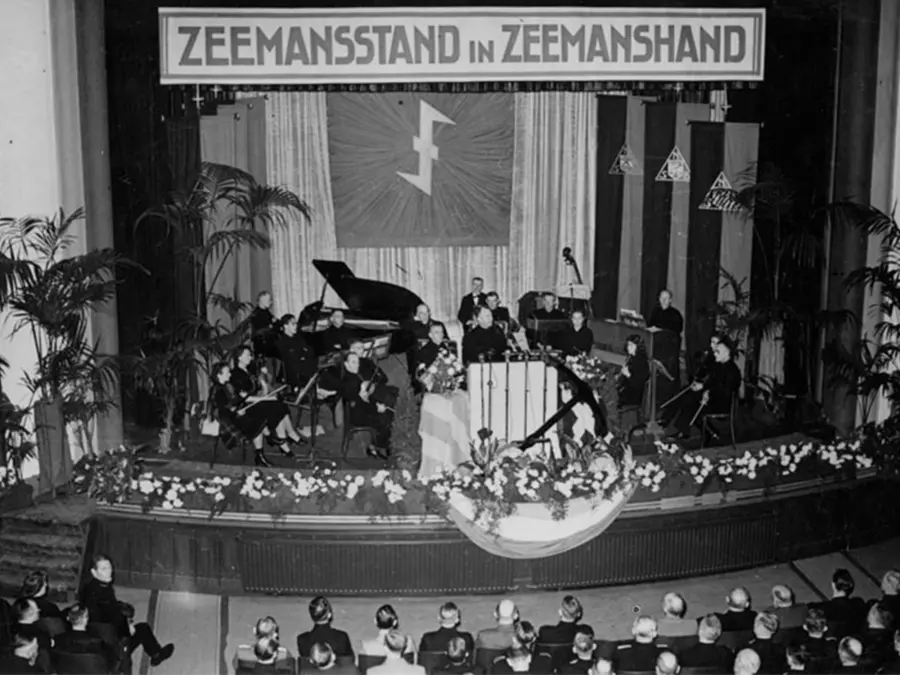
Over the past hundred years, the Colosseum has hosted a wide range of functions, with numerous ad hoc alterations gradually eroding the strength of the original design. Today, the entrance is tucked away along the side of the complex, while the once elegant front façade and canopy are boarded up behind commercial signage. In our redesign, the entrance building on Bijerlandselaan is carefully restored, and the former cinema entrance once again becomes the main access to the new apartment complex behind. The city regains a distinctive building, while young starters secure a home in the very neighbourhood where they grew up.
Contact us to start your project.
We create spaces and like to explore new ways of working together. Getting a better understanding of human dynamics.

Maarten Polkamp
architect/partner

Sander van Schaik
architect/partner
next
project
A second chance
redevelopment of one of Piet Blom's famous supercubes into a boarding school for detainees
Let's get connected.
Sign up to receive our news updates.