
For a better built tomorrow
Caring for the planet
At Brightside we care deeply about our planet. We have signed the Sustainable Building Covenant, helped draft the “Commitment Declaration on the Use of Biobased Building Materials”, and play an active role in knowledge networks that accelerate biobased construction. Our partners Sander and Maarten are trained as Certified Passive House Designers, making sustainability a core part of everything we do.
Paris-proof: shaping lower-carbon buildings from the first sketch
We believe Paris-proof building starts with a shared mindset: a commitment from clients, designers and builders to work towards the same goal. That is why we integrate CO2 reduction into the heart of our design process, from early concept to materialisation and execution. Together with our clients and project partners, we aim to shape buildings that make lower-carbon choices easier, better and more meaningful.
Biobased: natural materials with lasting value
We see biobased construction as one of the most powerful ways to align climate goals with excellent structural and building-physics performance. In recent years we have built up solid theoretical and hands-on experience with timber structures and biobased materials, including in projects we developed and (partly) built ourselves. That has allowed us to refine phase-shifting build-ups, damp-open assemblies and careful detailing into solutions that are breathable, moisture-regulating and pleasant to be in for both users and the people building them. By pairing the phase-shifting properties of biobased materials with night-time cooling from passive-house thinking, we achieve strong summer comfort without heavy, complex systems, and we actively share these lessons in biobased networks where we like to help pull the topic forward.
Passive house: comfort through performance
Unlike conventional frameworks such as BENG, the Passive House approach demands radical honesty about building physics and real-world performance. As certified Passive House designers, we apply these principles even when certification isn’t required, achieving major gains in comfort, robustness, and energy use. The combination of high comfort, low operational costs, and consistent construction quality gives our clients a solid business case: an investment that pays back in use and supports long-term value. Combined with the phase-shifting properties of biobased materials, Passive House provides an effective answer to a warming climate, while installation-light buildings reduce the use of finite resources and ease pressure on the grid.
Nature-inclusive: strengthening resilience and biodiversity
The smartest investments support the climate, the city, and local nature while improving comfort and long-term value. With simple, low-tech measures like green roofs that insulate and offer greenery, or retention roofs that ease heat stress, manage stormwater, and store rainwater for planting, you can boost both comfort and resilience. By tailoring planting to local biotopes and adding nesting or roosting spaces, we enhance urban biodiversity in a practical, low-cost way that strengthens both everyday comfort and real estate value.
Reuse as default: questioning the need to build new
At Brightside, we begin every project by asking whether a new building is truly necessary or if the goal can be met by using what already exists more intelligently. Together with our clients, we explore options like internal optimisation, reprogramming, and partial reuse of existing structures to avoid unnecessary emissions, waste, and costs while preserving embodied quality and character. When new construction is needed, we design with strong building physics, generous dimensions, and flexible layouts so each building can adapt to future uses. That’s the Brightside philosophy: build only what truly adds value and build it to last.
Contact us to start your project.
We create spaces and like to explore new ways of working together. Getting a better understanding of human dynamics.
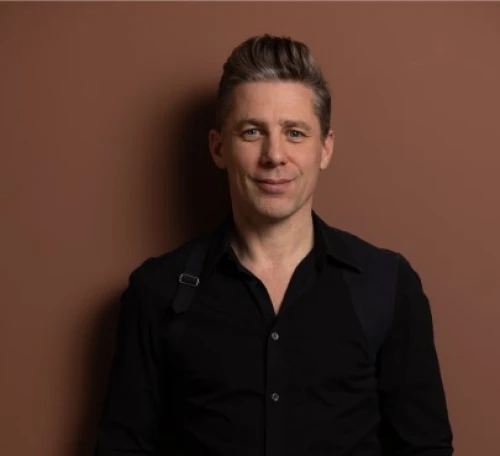
Maarten Polkamp
architect/partner
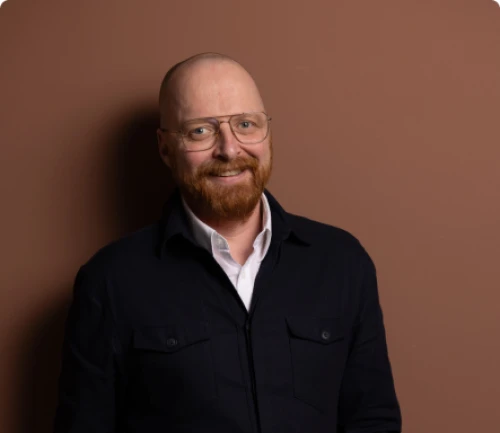
Sander van Schaik
architect/partner
Let's get connected.
Sign up to receive our news updates.